About
How the program works, and who runs it.
A Preservation Chicago initiative, launched in September 2026 and running first in Lincoln Park. Preservation Chicago administers it and approves the plaque wording, University of Chicago students carry out the research, and The Bronze Memorial Company in Broadview casts the plaques.
Scope
Where the initiative operates.
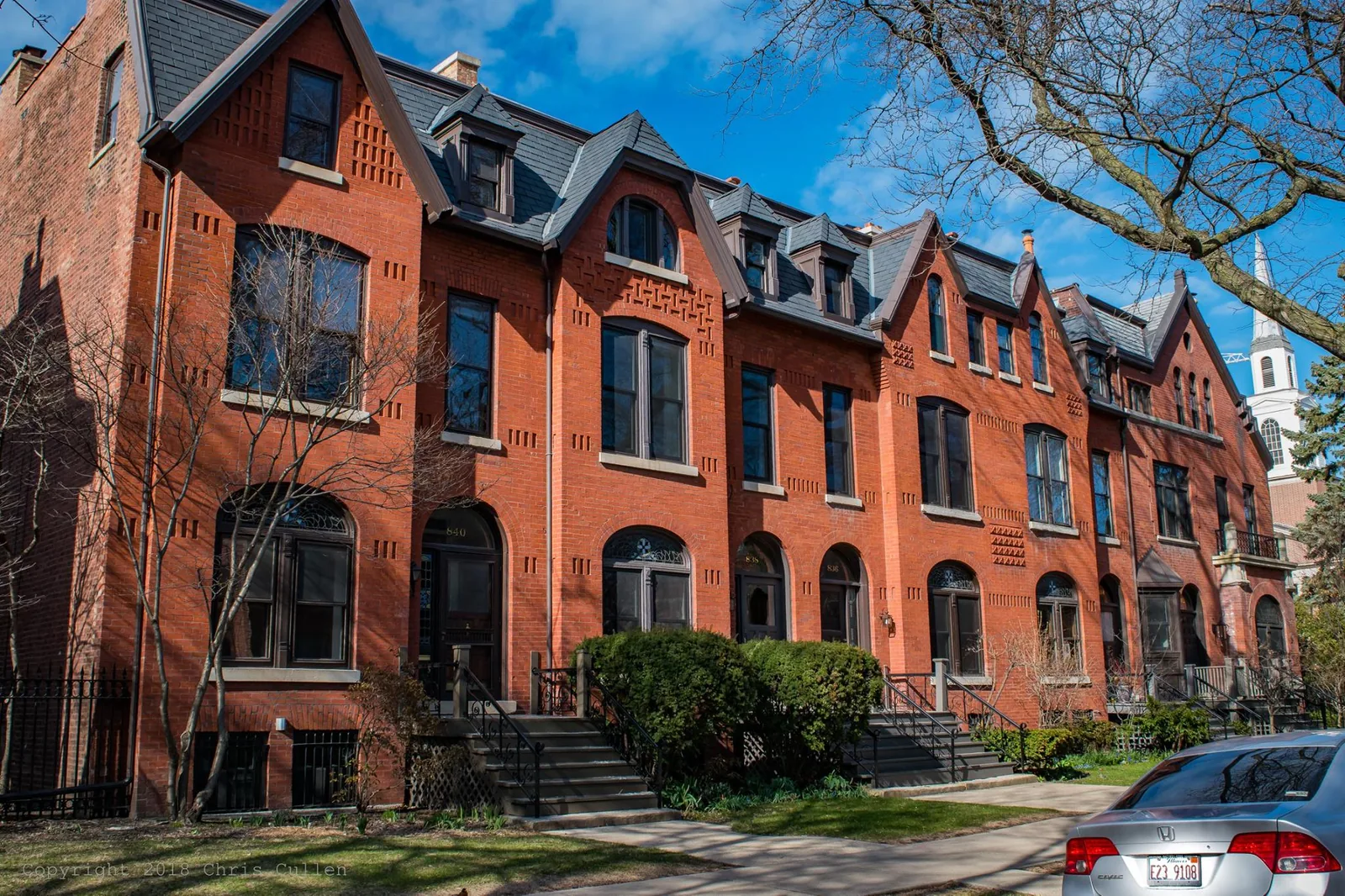
The Chicago Historic Plaque Program launched in September 2026 and runs first in selected historic areas of Lincoln Park: the Sheffield Historic District and nearby historic residential blocks.
That district was listed on the National Register of Historic Places in 1976 and covers much of the neighborhood. The listing recognizes the district as a whole; protection for an individual building comes from Chicago Landmark designation, which is a separate route.
Properties outside the pilot area may still be submitted. They are recorded and held; eligibility standards are set by Preservation Chicago and will widen as the program develops.
Partners
Who the participating organizations are.
Preservation Chicago
A nonprofit advocacy organization whose stated mission is to protect and revitalize Chicago’s architecture, neighborhoods and urban green spaces, working through advocacy, outreach, education and partnership. It publishes the annual Chicago 7 Most Endangered list, which named the Sheffield–Belden Group in 2024, and its advocacy work is pro bono. It administers this program.
University of Chicago
Emily Talen is a professor in the Division of the Social Sciences. Her research addresses urbanism and the relationship between the built environment and social equity. Her students carry out the property research.
Lincoln Park Neighborhood Leaders
Residents who identify candidate properties and supply the local knowledge that lives on the block. The program was proposed by Peter Millen.
The Bronze Memorial Company
The production partner, in Broadview, Illinois. Its work includes landmark plaques for the City of Chicago. It is the only party in the program that a homeowner pays.
Research
What the research consults.
Researchers work from historic records, deeds and title history, the succession of occupants, building permits and materials, and the surrounding block. They also check the Chicago Historic Resources Survey, the City’s 1990s survey of historic buildings — it was a rating from that survey that placed the 90-day demolition hold on 2240 N. Burling Street.
Findings are reviewed by Preservation Chicago before any wording is approved. Everything cast in bronze is what the research establishes. The record sets the limit, and the plaque stays within it.
Publication
What appears on this site.
Properties appear here as their research is completed. A house’s history is public record, and Preservation Chicago publishes what that record establishes.
Every photograph here is one Preservation Chicago holds the rights to, and each carries its credit.
Chicago Landmark designation is the instrument that carries legal force. Homeowners seeking protection for a building, or neighbors considering a landmark district, should contact Preservation Chicago about that route instead.
Coverage
In the press
Patrick Filbin, “Lincoln Park’s Historic Homes Are Disappearing. A New Program Wants To Tell Their Stories,” Block Club Chicago, September 17, 2026.
Brian J. Rogal, “Demolition of historic Lincoln Park home underway after lost preservation fight,” Chicago Tribune, April 25, 2023 — on the loss of 2240 N. Burling Street.
Mack Liederman, “152-Year-Old Lincoln Park Home Demolished After Fight To Preserve It,” Block Club Chicago, April 28, 2023.
Contact
Reaching the program.
The program is administered by Preservation Chicago, The Williams Building, 205 W. Monroe Street, Suite 400, Chicago, IL 60606.
Email info@preservationchicago.org or call 312-443-1000. To put a house forward, use the request form.