Chicago Historic
Plaque Program
Celebrating Spectacular Vernacular Homes
The Losses
2240 N. Burling Street, 1873–2023.
An Italianate wood frame three-flat, built in the years after the Great Chicago Fire and standing inside the Sheffield Historic District, rated historically significant by the City. In April 2023 it was torn down to make a side yard. Hundreds of other Lincoln Park houses have been lost the same way.
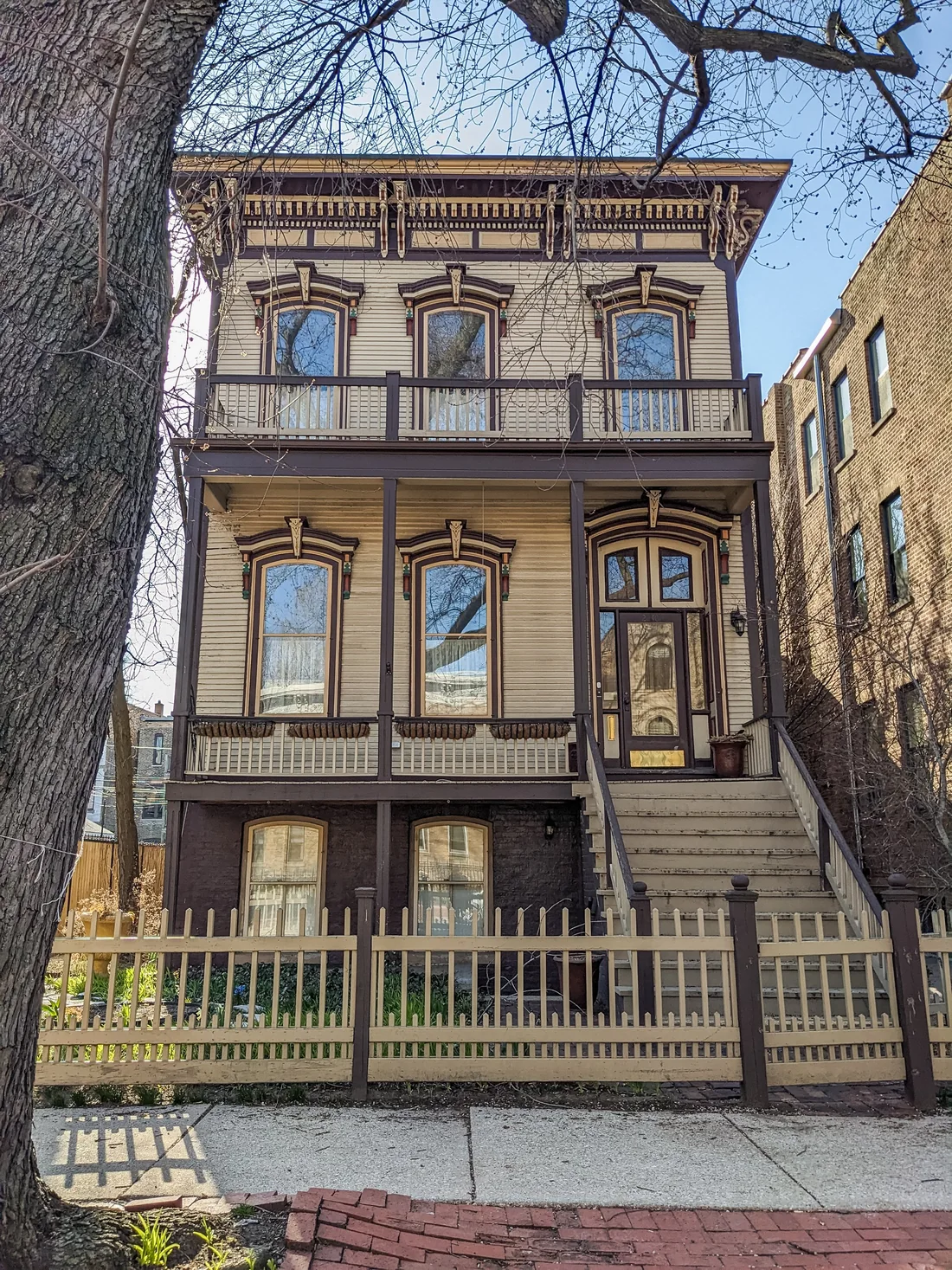
Peter Millen, a Lincoln Park resident who worked on the campaign to save the house and has spent years photographing the neighborhood’s architectural losses, proposed the plaque program.
“Peter roams the neighborhood taking pictures and has been very involved in historic properties.”
Emily Talen, Professor, University of Chicago (Block Club Chicago, 9/17/26)
“It has nothing to do with protection. It’s a community-oriented, crowdfunded sort of big neighborhood hug. The hope is that eventually, that neighborhood recognition would bubble up to decision-makers who might say, ‘These 50 buildings are beloved neighborhood buildings. They may not have formal protections, but they’re a beloved neighborhood asset.’”
Adam Natenshon, Director of Operations, Preservation Chicago (Block Club Chicago, 9/17/26)
The Stakes
A third of the Sheffield district, demolished or altered since 1993.
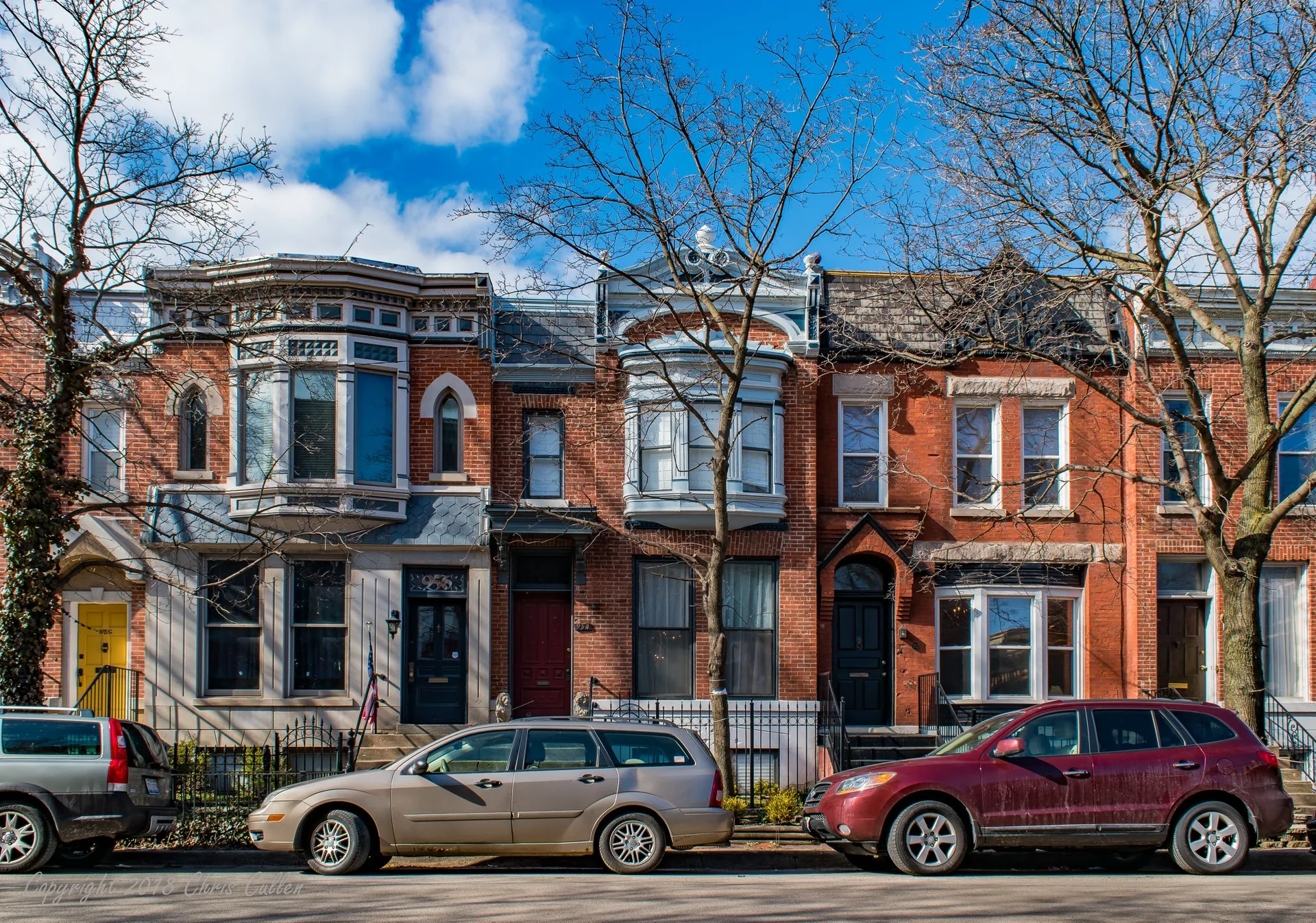
These are ornate, individually detailed houses — carved brackets, window hoods, porches and cornices. Most were built as workers’ cottages, two-flats and three-flats.
The losses follow a consistent pattern. Historic houses are demolished to make way for larger single-family homes, for side yards and gardens, or for expensive new construction replacing buildings that had held several households.
In 1976, roughly 1,000 pre-1900 buildings in Lincoln Park were listed as the Sheffield Historic District on the National Register of Historic Places, a rare designation for a residential area of that density. The losses continued. Between 1993 and 2019, by an analysis from Landmarks Illinois, more than 350 buildings in the district — roughly a third of its stock — were demolished or significantly altered, often converted from three-flats and other multifamily buildings into single-family homes.
The pressure is current. Preservation Chicago named the Sheffield–Belden Group, at the northwest corner of Sheffield and Belden avenues, to its 2024 Chicago 7 Most Endangered list. A few blocks north, buildings in the 2300 block of North Sheffield Avenue have faced demolition for an expansion of DePaul University’s athletic complex.
Adaptive reuse, facade preservation and building behind an existing structure are established practice. Each adds housing and keeps the existing building.
“I’ve been doing this for a long time, too, mostly experiencing total outrage walking around Lincoln Park at the destruction of historic properties for side yards and McMansions.”
Emily Talen, Professor, University of Chicago (Block Club Chicago, 9/17/26)
“The idea that you have to choose between preservation and density is a false choice. You can have both.”
Adam Natenshon, Director of Operations, Preservation Chicago (Block Club Chicago, 9/17/26)
Vision
Recognition for the buildings, and for the people who keep them.
The program recognizes the buildings that give Lincoln Park its history, and encourages the people who live in them to look after them.
“Building awareness and appreciation of your local environment and neighborhood are important things to foster.”
Emily Talen, Professor, University of Chicago (Block Club Chicago, 9/17/26)
Historic preservation in Lincoln Park ties into sustainability, neighborhood viability and diversity.
Method
Helping homeowners recognize and celebrate the architectural and historical significance of their home.
A homeowner submits an address and whatever history they already know. Preservation Chicago researches the house — when it was built, who lived in it, how it was used, and which architectural features give it significance — then reviews the findings for accuracy and approves the wording, all of it free of charge.
The homeowner receives a short written summary of the house’s history, drawn from available records, and orders the finished plaque from The Bronze Memorial Company in Broadview, paying the foundry directly.
“The hope is that it creates a little bit of pride of place. Maybe it makes people a little more preservation-minded when they own these properties.”
Peter Millen, Lincoln Park resident who leads the program (Block Club Chicago, 9/17/26)
The Plaque
A dignified marker with a timeless format.
Each plaque is a cast bronze oval designed to be mounted on a building or displayed on a freestanding stake — a permanent recognition of the home’s place in Chicago’s history.
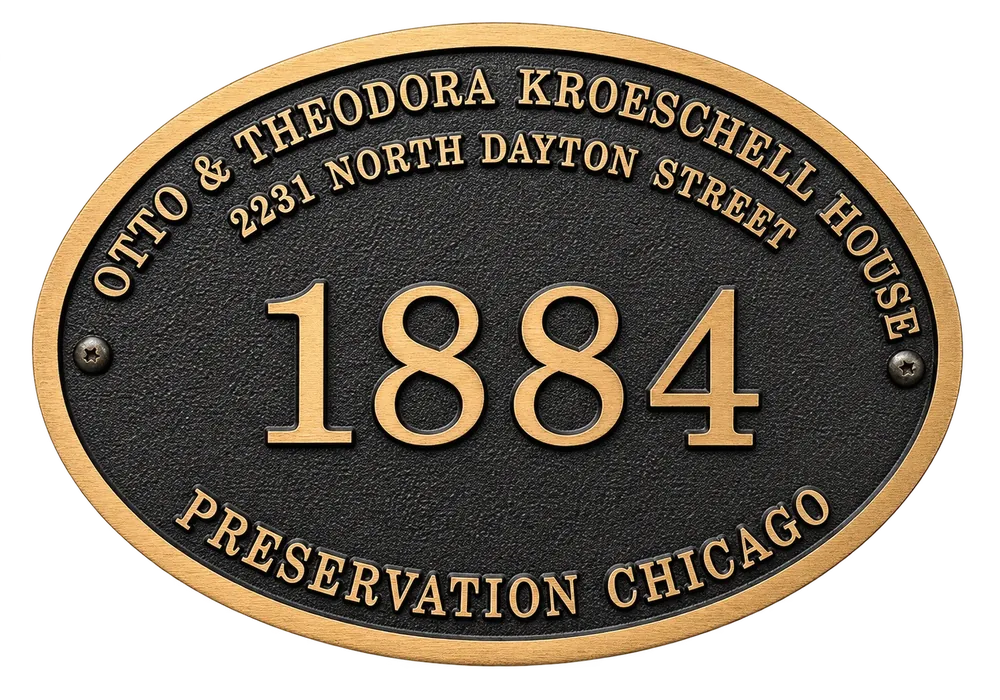
This is an example — a mock-up of what a future plaque would look like. Photo credit: Preservation Chicago.
Partners
A partnership between Lincoln Park Neighborhood Leaders, Preservation Chicago, and the University of Chicago.
Lincoln Park Neighborhood Leaders identify eligible properties and contribute the local knowledge that lives on the block.
Preservation Chicago serves as the program’s back-end facilitator: intake, coordination, research review, and approval of the plaque wording, ensuring the accuracy of what is cast in bronze and guiding homeowners through each stage. Homeowners pay the foundry directly.
University of Chicago students carry out the property research, working with Professor Emily Talen. What they consult, and how their findings are reviewed, is set out on the about page.
“There’s a movement in historic preservation to go beyond a simple plaque and really tell the story of a building. That’s important so that it isn’t just window dressing or an elitist look at an attractive property. It should talk about the meaning and context of buildings.”
Emily Talen, Professor, University of Chicago (Block Club Chicago, 9/17/26)
Eligibility
The pilot covers Lincoln Park.
The area is the Sheffield Historic District and nearby historic residential blocks. Preservation Chicago researches each house submitted; a homeowner does not need to know its history first.
It is meant to be accessible to homeowners and residents rather than limited to preservation professionals. No expertise is needed to put a house forward.
Preservation Chicago sets eligibility standards as the program develops. Submissions from outside the area are recorded.
What the research looks for:
When the house was built.
Original features that survive.
How the house sits among its neighbors.
The original owner, builder or architect, and how the building was used.
A plaque is recognition. Chicago Landmark designation is the separate route that carries legal force: for an individual building or for a district, it requires Commission review before a designated building can be demolished or its exterior altered. Old Town was designated a Chicago Landmark district in 1977 and kept much of its Victorian-era architecture. If legal protection is what a homeowner wants, that is the route, and Preservation Chicago can point the way to it.
Process
From inquiry to installation.
The program is expected to follow these steps. Details remain subject to Preservation Chicago review as the pilot develops.
A homeowner expresses interest through this form or by contacting Preservation Chicago directly.
Preservation Chicago or a designated research assistant conducts an initial review to determine whether the property appears to qualify.
Basic historical information is researched or reviewed — including construction date, original owner or builder, and relevant historical context.
Proposed plaque wording is reviewed by Preservation Chicago before production to ensure consistency and accuracy.
The homeowner receives final cost information and payment instructions. Homeowners order and pay Bronze Memorial Company directly.
Once approved and paid for, the plaque is produced and shipped to the homeowner or designated address.
Installation is expected to be handled by the homeowner. Mounting guidance will be provided.
Purpose
The record behind the plaques.
Each plaque carries a summary. A page for each house will follow on this site — its history, photographs, and its location on a map — so that the neighborhood can be walked as a self-guided tour.
A street museum, free and open to everyone.
“This is a way of doing the emotional work, the intellectual work, the amplification work and the educational work with communities so that when a threat emerges, people have already formed their opinions. They’re pro-preservation, pro-neighborhood and pro-character.”
Adam Natenshon, Director of Operations, Preservation Chicago (Block Club Chicago, 9/17/26)
Request a Plaque
If you live in one of these houses, we would like to know.
Tell us the address and whatever you already know about the building. The form is an inquiry; you decide afterward whether to go ahead.
Further detail is available on the about page and in the FAQ.